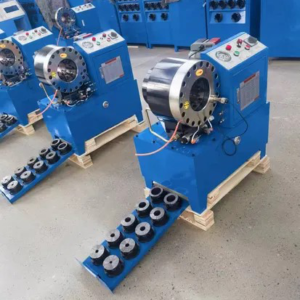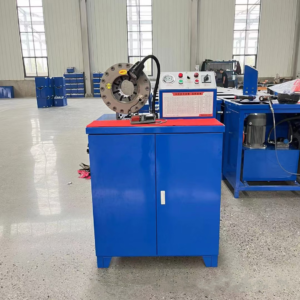
How Choose Hose Crimping Machine
Selecting the right hose crimping machine is crucial. It ensures safe and reliable hydraulic connections. This guide will help you make the best choice. We will use short, clear sentences for easy understanding.
1. Start with Your Hose and Fittings
First, know your hose specifications. Check the hose size and type you use. Your machine must match these. Consider hose inner diameter and outer diameter. Also note the reinforcement type. Common types are wire braid or spiral wrap. Different hoses need different crimping forces.
Next, identify your fitting style. Fittings must be compatible with your hoses. Popular brands include Weatherhead, Aeroquip, and Parker. Your crimper must suit these fittings. Check the fitting diameter and thread type. The machine should handle your specific attachments.
2. Consider Your Work Volume
Think about your production needs. How many hoses will you assemble daily? For occasional repairs, a manual machine may suffice. For high-volume shops, choose an electric or hydraulic model. Faster machines improve workflow and save time.
3. Match the Crimping Force
Evaluate the machine’s power. Crimping force is measured in tons. Higher pressure hoses need more force. A 6-wire spiral hose requires greater tonnage than a 1-wire braid. Match the machine’s capacity to your strongest hose. Do not buy an underpowered unit.
4. Check the Die System
Look for precise and adaptable die sets. Dies shape the fitting onto the hose. They must be the correct size. Many machines use interchangeable die sets. Ensure your chosen machine comes with the dies you need. Also verify that extra dies are easy to purchase later.
5. Prioritize Ease and Safety
Choose a machine that is simple to operate. Modern units often have digital controls. These settings improve accuracy. Look for clear gauges or displays. Simple controls reduce operator error.
Never compromise on safety. A good machine has physical safety guards. These protect hands during operation. Some models require two-hand controls. This action keeps hands clear of the crimping area.
6. Plan for Your Workspace
Assess portability and size. Will the machine stay in one place? Stationary models offer more power. If you need mobility, consider a lighter cart-mounted unit. Ensure it fits in your available space. Also check power source requirements.
7. Research Brand and Support
Review the manufacturer’s reputation. Choose a trusted brand. Read customer reviews for real-world feedback. Good companies offer reliable technical support. Check the warranty terms. Confirm that spare parts are readily available.
8. Balance Cost and Value
Make a smart investment. Do not choose by price alone. A cheaper machine may lack durability or precision. Investing in quality prevents future problems and downtime. It ensures consistent, leak-free crimps for your hydraulic systems.
Conclusion: Make an Informed Decision
A good crimping machine is a long-term asset. It helps build safe replacement hoses efficiently. Start by listing your specific needs from the steps above. Compare several machine models closely. Ask for a demonstration if possible. Taking the time to choose correctly will support your high-pressure applications for years to come.